Food & Wine · Music
Paul Cullen
From the bass rig in Bad Company to a private kitchen at the shore, eleven Italian labels, and a guitar after dessert.
Paul Tagliaferro Cullen arrived in Delaware for a long weekend and never really left. It was the Fourth of July, 2001. A drummer friend from his Florida days, Michael Daisy, needed a bass player and asked him to come down and hear the band. On the final night of the vacation, a gorgeous blonde young woman walked in with tattoos and braces. Her name was Bonnie. Ten days later he moved out of Buffalo for good.
I can’t believe I have been here for over a third of my life. This area had everything to do with my reinvention.
Twenty-five years on, the reinvention is complete and still moving. The man who once played arenas with an iconic British rock band now cooks dinner in your kitchen, pours wine he imports under his own label, plays a concert when the plates are cleared, and runs a nonprofit venue that gives young people in the culinary and musical arts a stage.
I. The Stage
He did not pick up an instrument until 1980, at twenty. Before that he was an athlete. Four years earlier, at sixteen, he had watched Bad Company play a concert in Buffalo in 1976. As he tells it, if a friend had leaned over that night and said he would one day play with those guys, he would have asked whether they were high, which, he allows, they probably were. In 1990 he got the call to join them, and stayed through the end of 1993 into 1994.
Ask him whether the road was hard and he will tell you the opposite. The worst part of getting on a tour bus, the saying goes, is getting off it at the end of the tour, because that means going back to reality. Four thousand people some nights, fifty-five thousand others. Ritz-Carlton hotels, million-dollar buses, serious money.
Every night was awesome, whether it was three thousand or fifty-five thousand. It did not matter. It was so surreal for the first couple of months that I would wake up and I would be in Cincinnati and think, oh my God, I am in Bad Company.
He is candid about the other side of it. As extraordinary as the run was, it was equally devastating when it ended, and what carried him through was work rather than luck. That is the reinvention he credits to this coast, and to Bonnie.
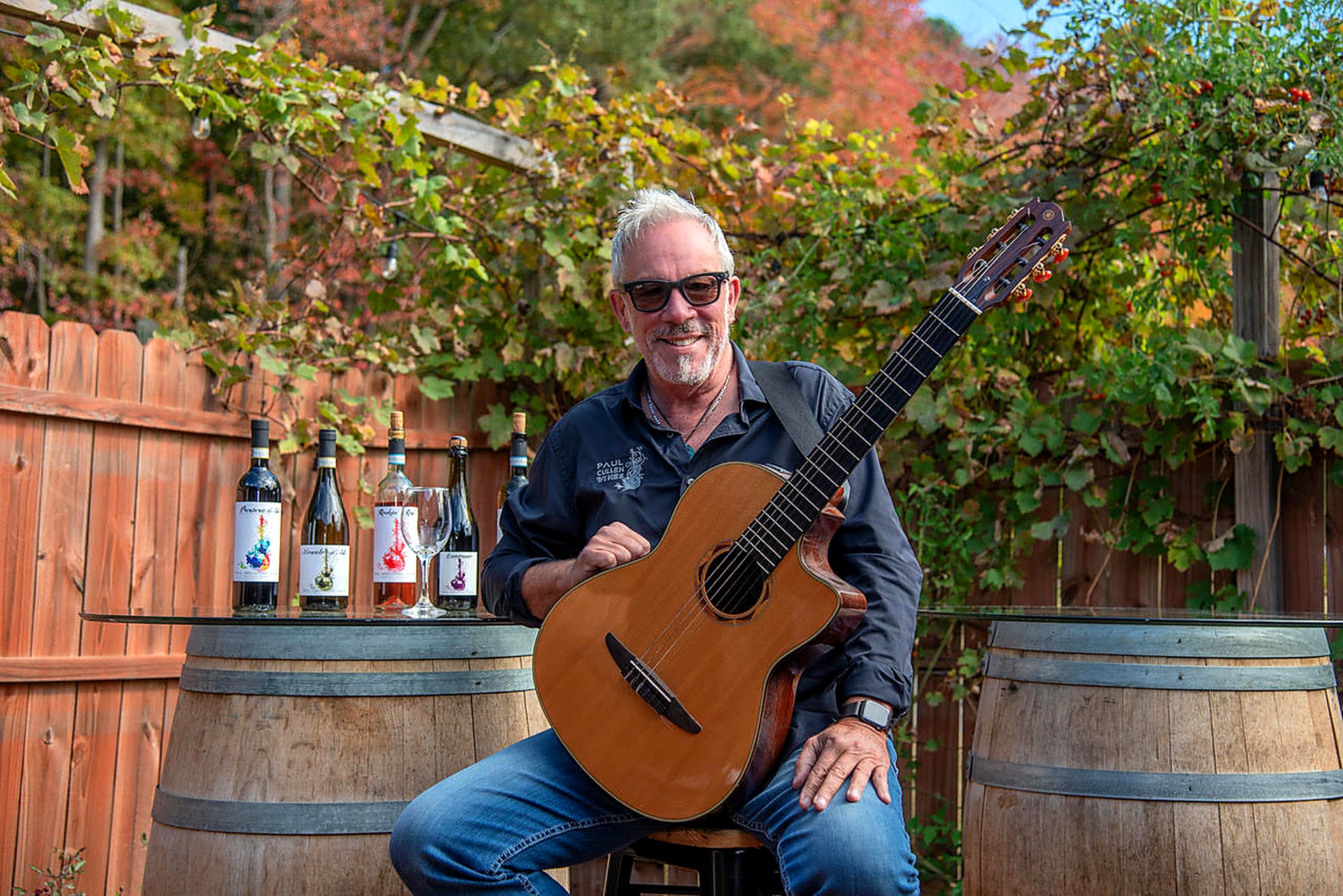
He switched from bass to guitar in 2007, and has written and recorded more than fifty originals since. The most recent release, Live in Tuscany, was cut live with the violinist Alessandro Golini at a winery in Montalcino, and the catalogue reads like a passport: Down by the Lake, Sei Otto, Matthew, Devotion, Tango de Havana, and two written for the winery itself, One Night Wine Chill and Cinque Vini Wine Chill. In recent months he has played from Italy to California to Cuba.
He still plays bass in two projects: Bad River, formed with Tony Sciuto of the Little River Band and heard most often around southern Delaware, and Bad Company Unplugged, a stripped-down duo with his friend Robbie LaBlanc.
Chapter I · The Footage
Thirty-Six Years, Two Instruments
The Arena Years
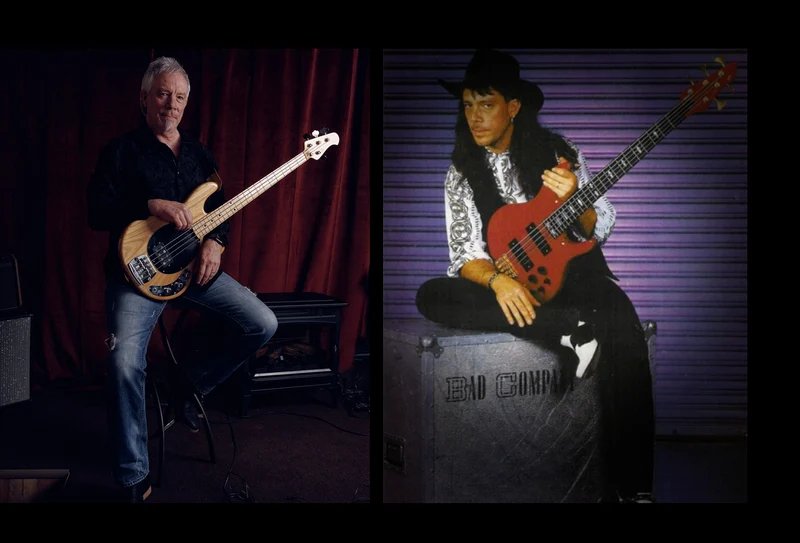
He is on the left with the red bass. Fifty-four frames, by his mother's count.
The Guitar Years
The same man, thirty-odd years on, with a violinist and a Montalcino cellar behind him.
II. The Kitchen
The pivot happened the way the best ones do, sideways and by invitation. He loved cooking for people. He had friends who were serious chefs, among them James Beard nominees. Someone asked him to cook a dinner. He said yes. Then they asked whether he would bring his guitar.
He cooked for ten people, played afterward, and that single night, roughly fourteen years ago, became the business. The private chef work formally began in 2014, and it has since run past sixteen hundred events.
There was no culinary school. There was a grandmother. Callia Tagliaferro was full-blooded Italian, as is his mother, Nancy, and as the oldest of twenty-seven grandchildren he was in her kitchen before he could reach the counter. His mother worked, unusual in the early nineteen sixties, so she dropped him next door each morning and collected him after work. His grandmother was always cooking.
Cooking from the heart. And when you do sixteen hundred events, you kind of learn how to cook.
He cooks regionally. In Piemonte he has specific dishes he pairs with specific wines. He has cooked at Osteria in Philadelphia at the invitation of his friend Jeff, who owns it, and he cooks alongside friends in Italy whenever he takes a group over.
The in-home dinner runs one hundred twenty-five dollars a person, with an additional charge for his assistant, Nina. Guests are sent to the store for his wine beforehand, and he builds the pairings around what they bring back. Nobody drives home. Nobody leaves the house.
My summers are crazy. People come for a week or two weeks, so every day is a Saturday.
III. The Cellar
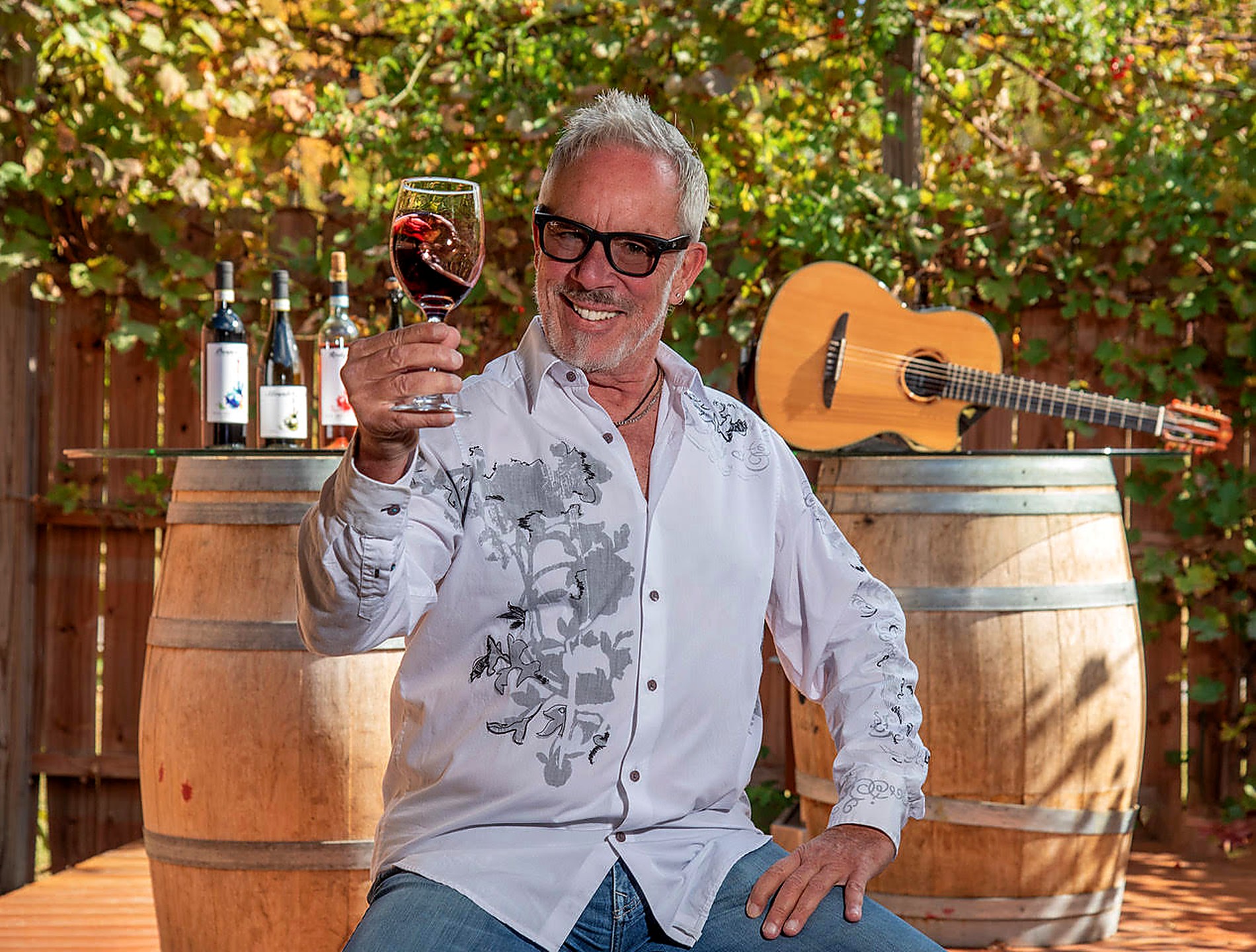
The wines came from friendships. He has known some of his Italian producers for twelve to fifteen years, and had been pouring their bottles at dinners long before he held an import license. Once he had one, he called them and asked whether they would do a private label with his guitar on it. They all said yes.
That was about four years ago, and it began with two wines: a Barbera d’Asti and a Roero Arneis. There are eleven now. The Barolo is new and, in his words, just amazing. There is a Chardonnay from Piemonte, unusual for Italy, raised only in stainless steel with no oak, which he considers the true taste of the grape.
There is also, for the first time, a California wine. When tariffs landed on the importer’s side of the ledger, which is to say on him, he called a friend in Lodi and made a Zinfandel and Cabernet Franc blend. It is called Rock and Roll Fantasy, and the first verse is printed on the back label. Here come the jesters, one, two, three.

The Labels
Eleven Wines, One Guitar
- Chianti DOCG
- Barolo
- Barbera d’Asti
- Roero
- Rockin’ Bianco Chardonnay
- Rock & Roll Fantasy, Lodi
- Rockin’ Rosé
- The Sparkling Trio: Lambrusco, Prosecco, Moscato d’Asti
Produced with Italy’s family vineyards using sustainable practices. Shipped to more than forty states, with free shipping over one hundred dollars.
Shop the WinesIV. The Room
Closer to home there is The Room at Cedar Grove, the venue run by his nonprofit, Paul Kares, which supports young adults in the culinary and musical arts. It hosts dinners and concerts with national and regional acts, and it is where Bad River plays, one of the few rooms where he still straps on a bass.
The Experience
Bring Paul to Your Table
Dinner cooked in your kitchen, paired to his wines, followed by a concert in your living room. One hundred twenty-five dollars a person.
Enquire →The Venue
The Room at Cedar Grove
Dinner and concert nights run by the Paul Kares nonprofit, supporting young adults in the culinary and musical arts.
Visit →V. The Voyage
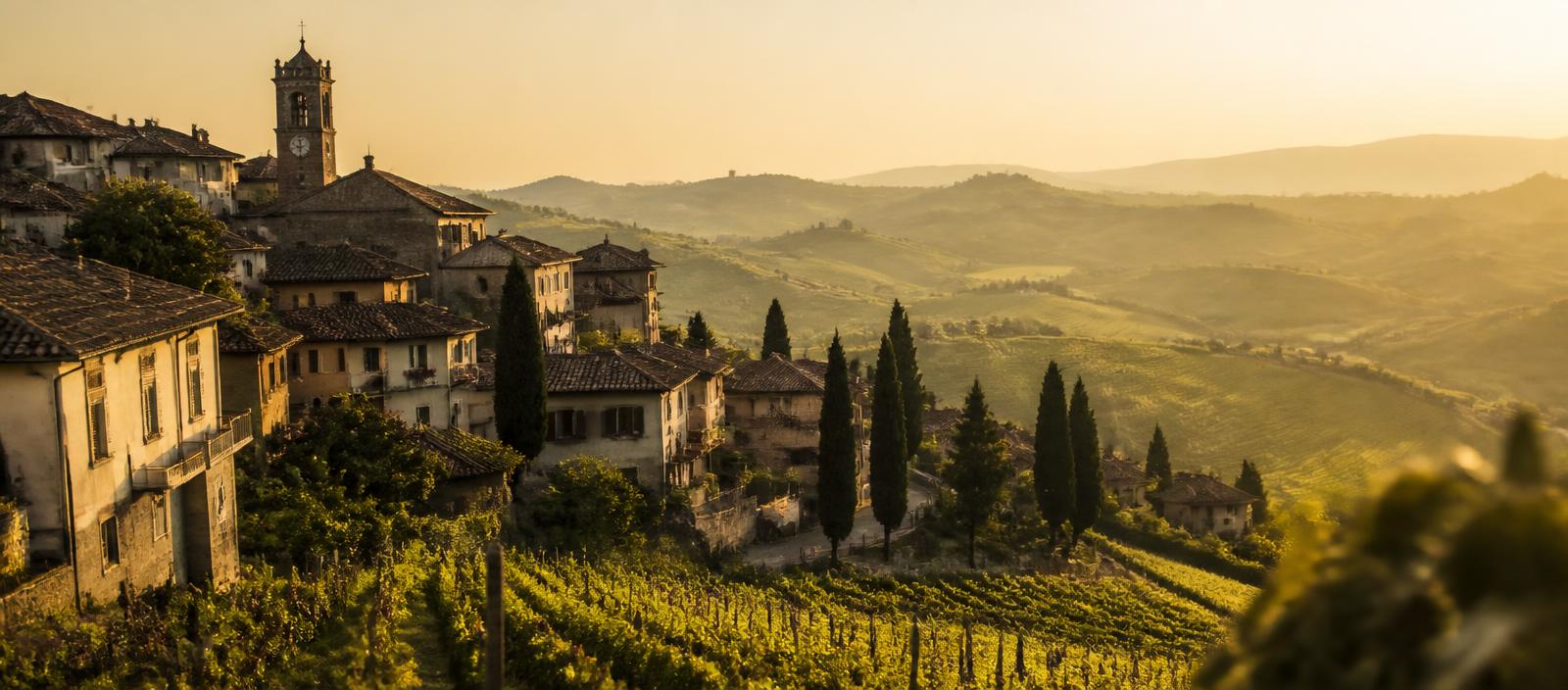
The travel grew out of the pairings. He and Bonnie host guided culinary trips through the regions his wines come from, where the producers are friends, the cooking is done together, and the itinerary is built around the table rather than the bus.
Book the Trips
Travel with Paul
Windstar · 2027
Paul's Birthday Cruise, the Caribbean
All-inclusive sailing with Paul and Bonnie. Only a few rooms remain.
Oceania · 2027
Rome to Venice
All-inclusive, coast to coast across the Italian peninsula.
Northern Italy · 2027
Piemonte & Verona
The region behind the labels: producers, cellars, and long tables.
France · November 2026
The French River Cruise
A week on the water, featuring Paul and his wines.
VI. The Good Life
There is a neat symmetry to the whole thing. He spent his youth in a grandmother’s kitchen, his thirties in arenas, and the quarter century since building something that puts both in the same room: a meal made by hand, a bottle with his guitar on the label, and a set of songs when the table is cleared.
Doing wine pairings is one of the things I love to do, because I have spent time in the regions my wines come from and learned to cook from chefs and nonnas and teachers.
Twenty-five years after a Fourth of July weekend that was only supposed to last a few days, that is the business, and it is also, unmistakably, the life.
Interview by Christian Shane Dougherty · Photographs courtesy of Paul Cullen