Heritage & Place
An Anchor of History, A Voyage Toward the Horizon
On the eve of her retirement, Jan Ross reflects on eight years guiding marketing and public relations for the Kalmar Nyckel Foundation, and on the Tall Ship of Delaware as classroom, civic emblem, and living invitation to step aboard history.
A City to Coast Conversation · Summer 2026 · America250
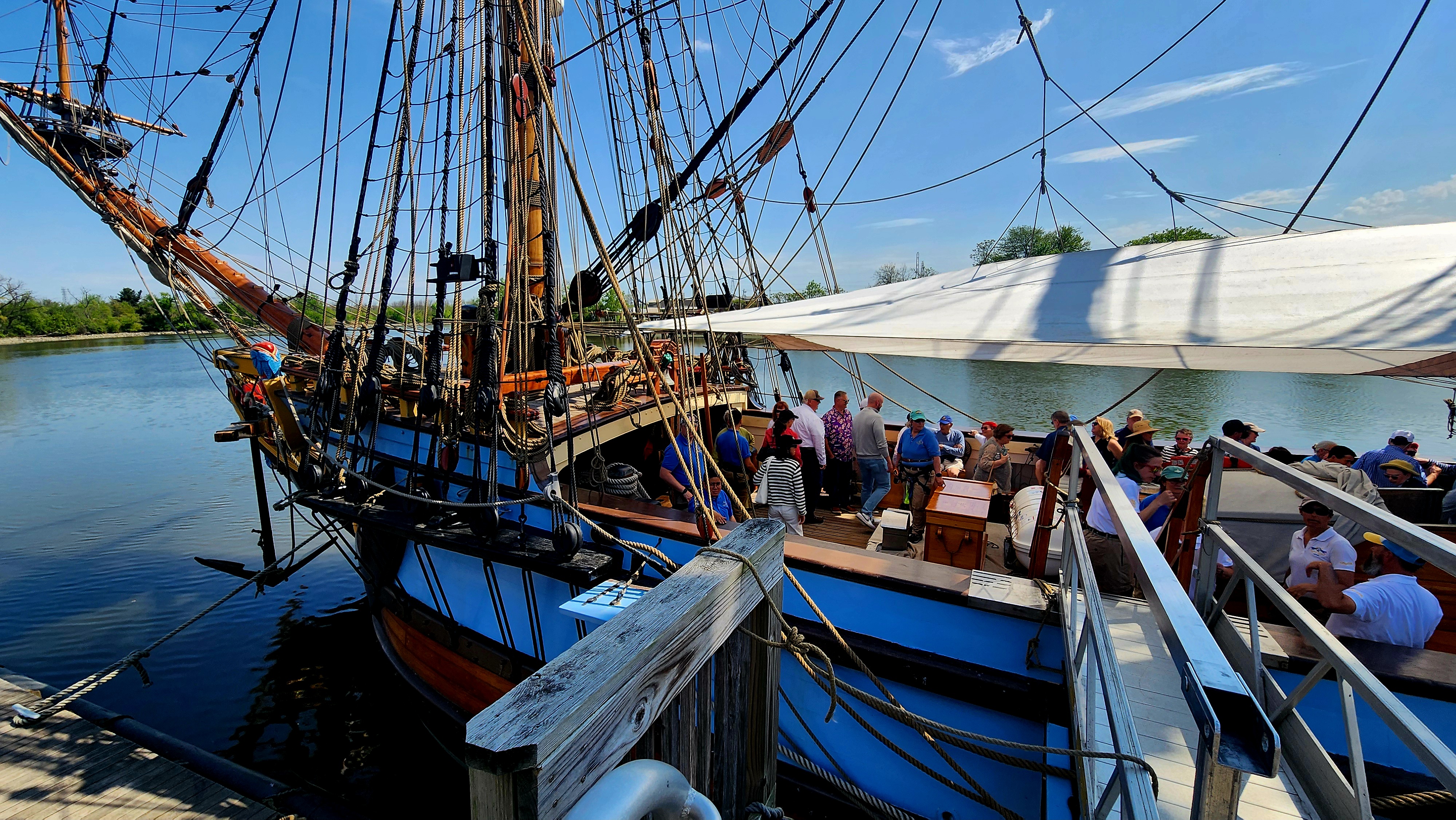
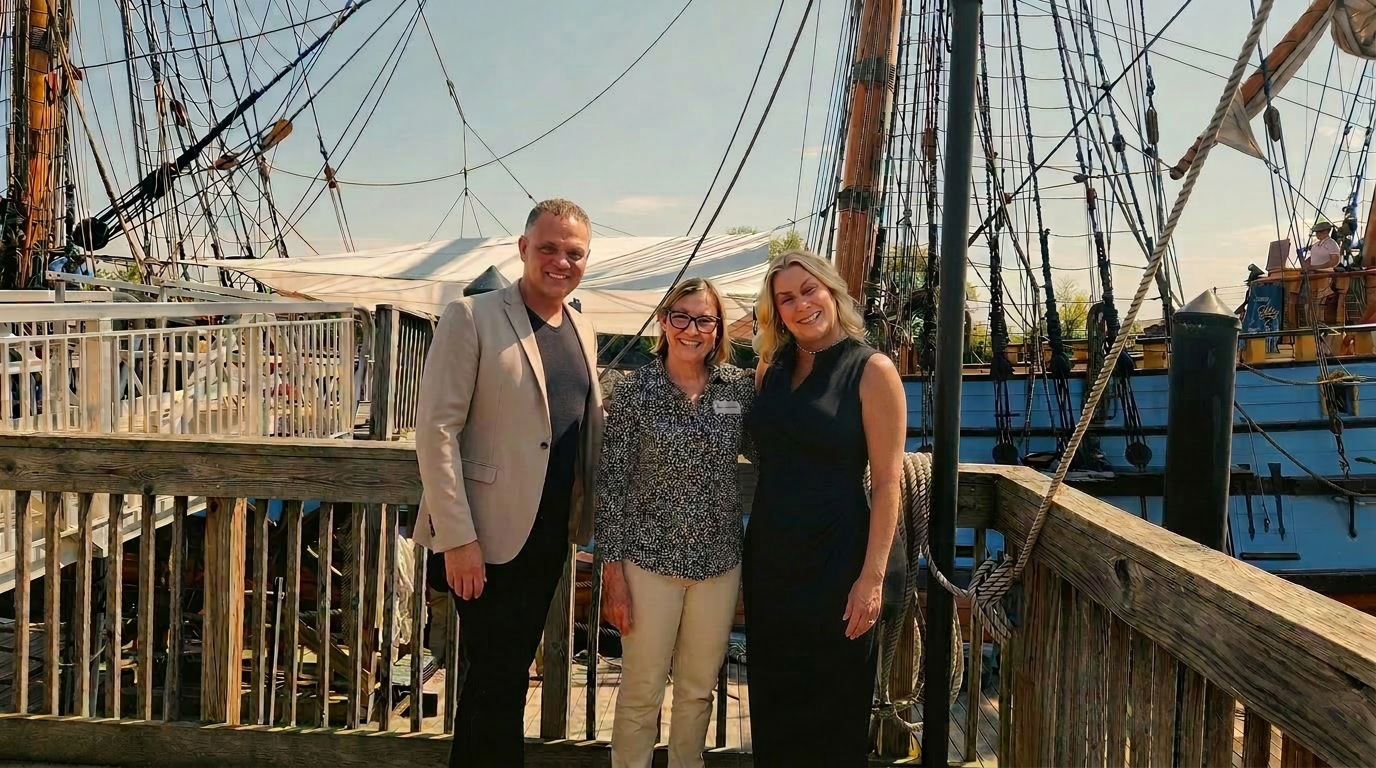
She is not Swedish. She is not from Delaware. She is, by her own cheerful admission, not a seventeenth-century sailor. And yet Jan Ross has spent the better part of a decade among the many persuasive voices, captains, educators, deckhands, and the legion of volunteers who give the Kalmar Nyckel its weekly pulse, helping carry the ship's story into the wider world. The vessel has come to stand, in Wilmington, for something larger than maritime nostalgia: a working classroom, a volunteer engine, a civic stage, and, in the most literal sense, a vessel through which the region can still meet its own beginnings.
Ross arrived at the foundation by way of a career that hardly reads like the usual prelude to colonial history. There was MTV in its loud, irreverent prime. There were years in entertainment marketing, agency work, and national media. Then there was family, a move to the Delaware region, and, eventually, nonprofit life, the part of the story that led her to the Tall Ship of Delaware and to the exacting business of turning four-hundred-year-old history into something children, donors, day-sail passengers, and first-time visitors can feel in their hands.
From MTV to the Mast
Ross remembers the entertainment years with the kind of detail that reveals both affection and professional muscle. She started as a production assistant at MTV in New York in 1988 and worked her way into marketing during the channel’s famously combustible golden age. She knew the era when Alice Cooper might stroll into a control room merely to thank the crew, when Yo! MTV Raps could consume hours in loose, brilliant improvisation, and when the company’s tenth anniversary meant Prince performing privately at the old Ritz, once Studio 54, two blocks from the office.
Universal Studios, Discovery, STARZ/Encore, and agency leadership followed. Motherhood redirected the arc toward the nonprofit sector. By the time she came to the Kalmar Nyckel Foundation, Ross had already learned how to tell a story, how to raise attention around a public-facing institution, and how to make audiences feel that a place belonged to them. Those skills, transferred to Wilmington’s waterfront, proved unusually well-suited to a ship whose meaning depends on being continually reintroduced.
“We sail it like a 17th-century ship, and that means we are hauling lines. It is work, but you are always invited to join in, learn the rhythm of a shanty, and have fun.”
 On Deck
The Key of Kalmar
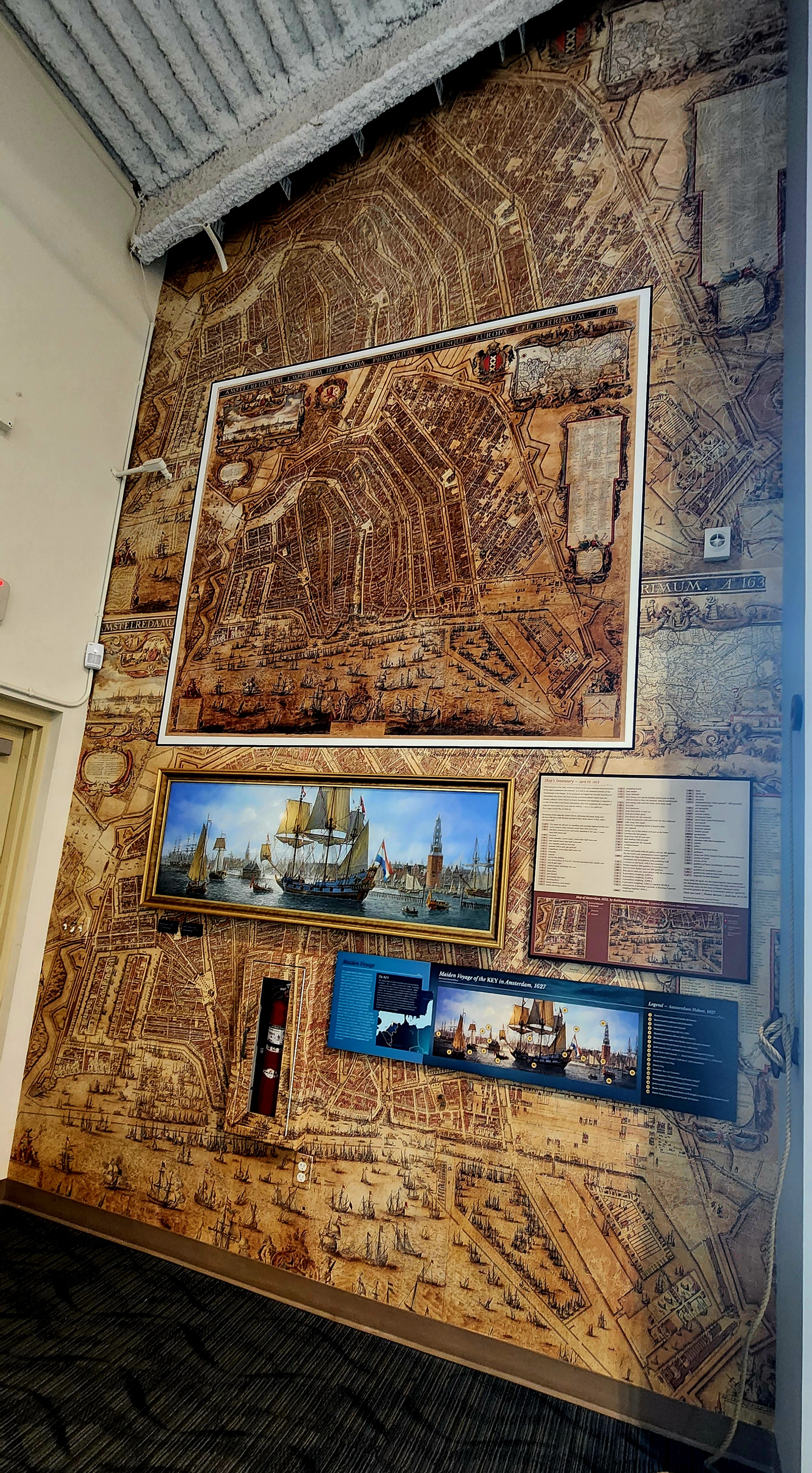
For the uninitiated, Ross offers the foundation myth with admirable clarity. Nyckel means key. The original ship was built in Amsterdam around 1627, later purchased by the Swedish crown, and made four round trips across the Atlantic, more than any vessel of its kind in its day. In 1638, it carried the first permanent European settlers of New Sweden into the Delaware Valley, planting a story whose traces still sit just blocks from the Kalmar Nyckel Foundation’s campus: Old Swedes Church, its churchyard, and the long memory of a river once understood as frontier, trade route, and promise.
That historical reach is what makes the modern ship more than a replica. It is a bridge between the heavily footnoted past and the vivid, public present. In Ross’s telling, the Kalmar Nyckel does not flatten history into sentimentality; it restores scale to it. Atlantic crossings were punishing. Merchant voyages were commercial calculations as much as acts of daring. Survival, cargo, weather, labor, navigation, and risk all sat side by side. That, in turn, is what makes the vessel so useful as a teaching tool. It returns texture to a chapter that too often arrives in the classroom as a paragraph.
 Origin
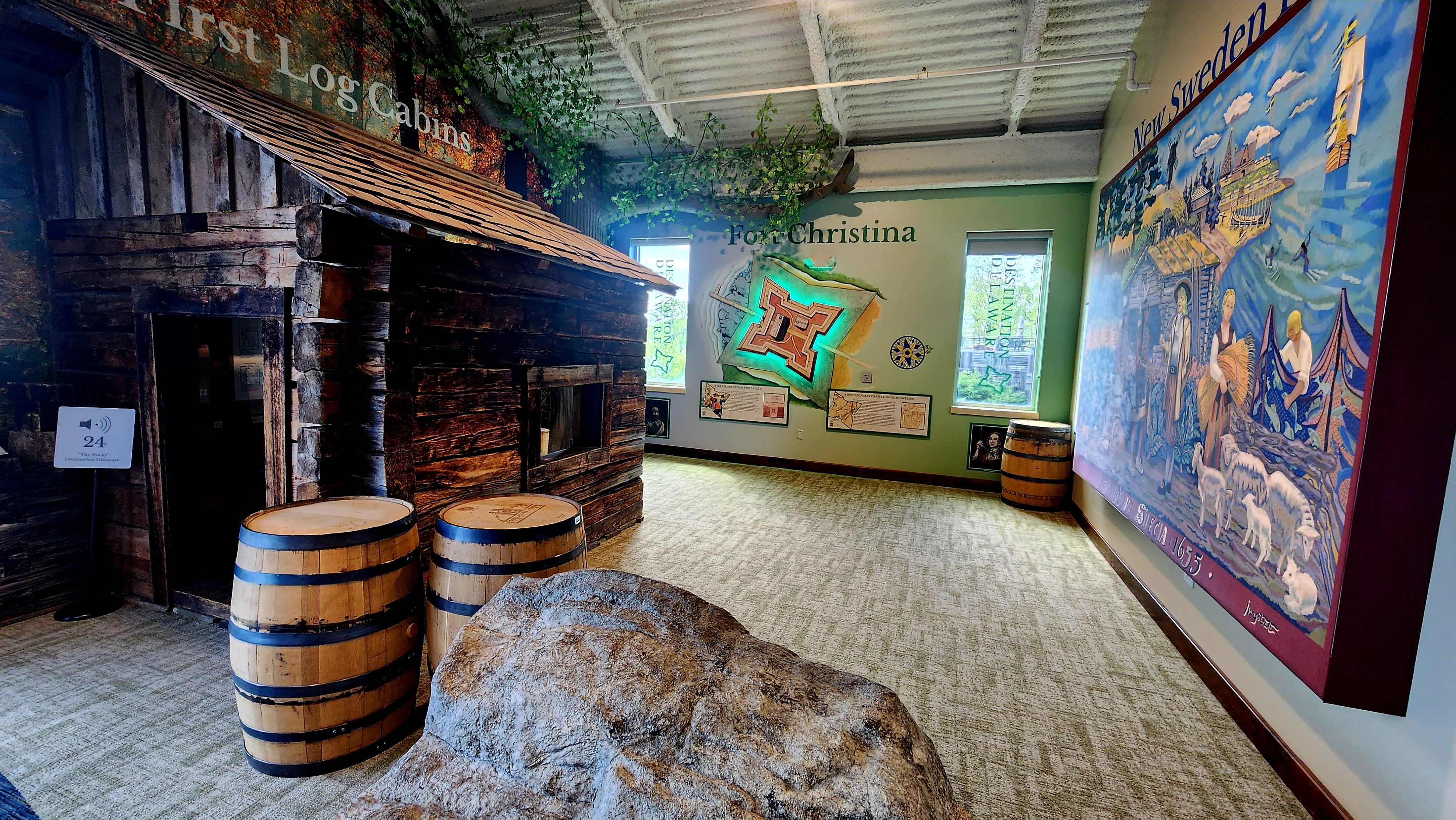
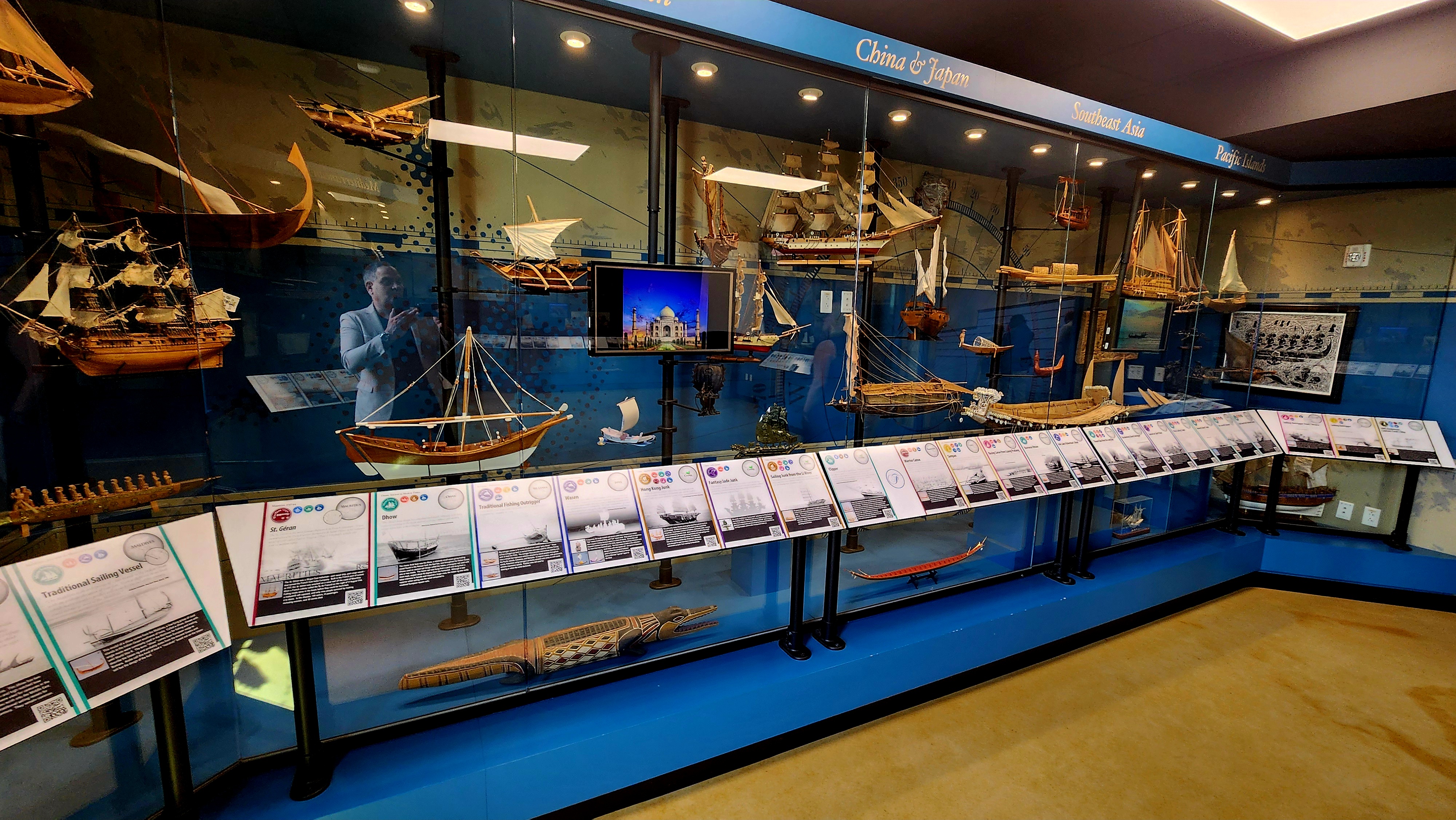
In the galleries, that long voyage is rendered in rooms that move from the Dutch world of shipbuilding to the riverbanks of Delaware. Fort Christina appears not as isolated tableau but as one part of a wider network of ambition, settlement, and exchange. The effect is subtle and persuasive: history is not tucked safely behind velvet rope, but arranged as a sequence of intelligible rooms through which visitors can walk at their own pace.
 Fort Christina
Education as North Star
Education, Ross says, is the foundation’s primary mission, and the Copeland Maritime Center is the architectural proof of that conviction. Part museum, part education center, it is calibrated especially well for fourth grade, that moment in Delaware classrooms when state history still feels close enough to wonder. The sweet spot matters. Children of that age are old enough to follow narrative but young enough to remain unembarrassed by awe.
The programs are admirably concrete. Students do not merely hear about voyages; they pack a model ship with the cargo, water, bricks, and bodies required for a transatlantic crossing. They calculate cost. They test the economics of a merchant ship. They learn cannon drill, team structure, and the choreography of cooperative labor both on land and, when possible, on the water. The challenge is not only to sail, but to survive and make a profit, a beautifully unsentimental lesson in why the ship existed in the first place.
 Instruction
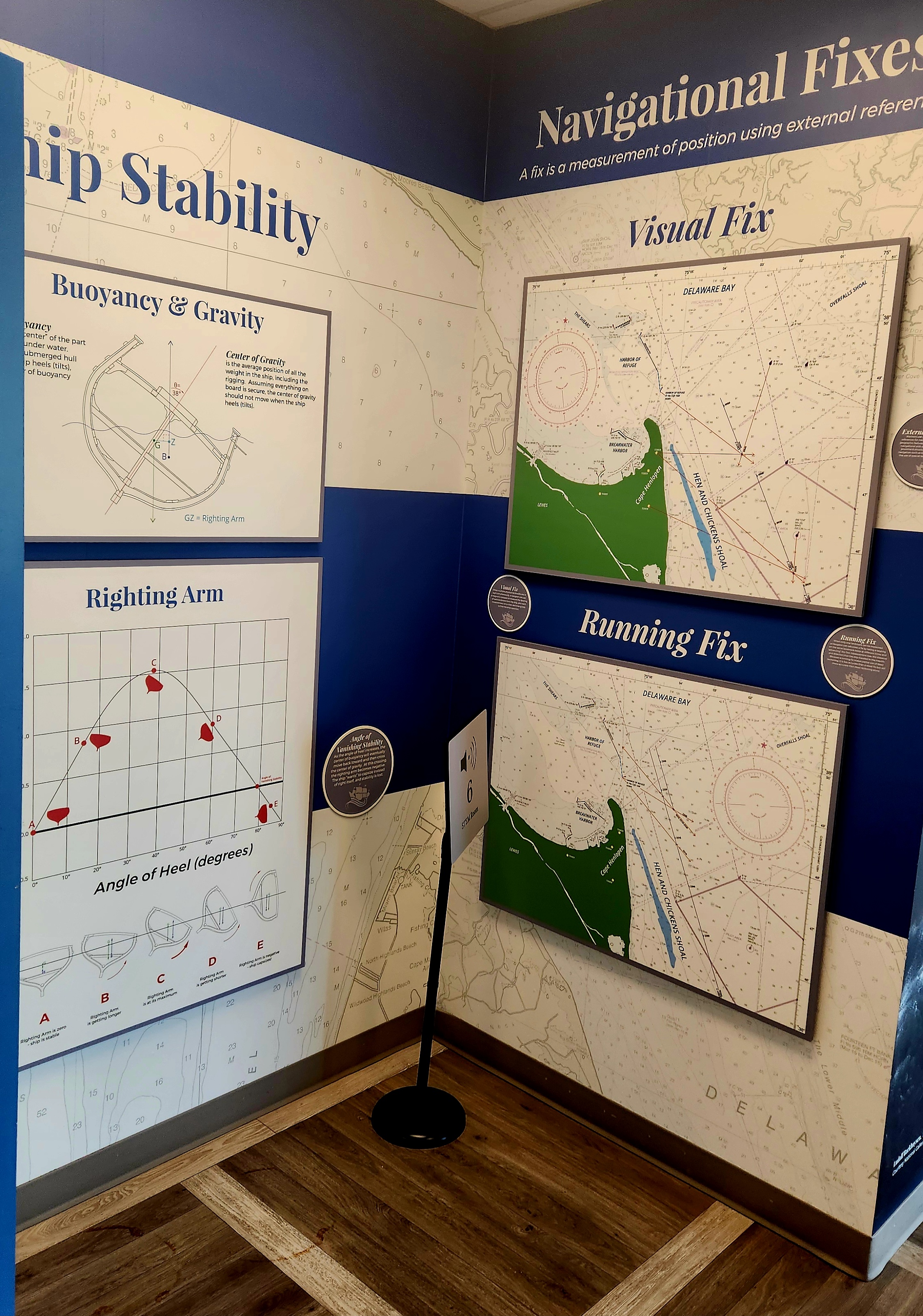
That seriousness of method is part of the pleasure of the place. Nothing is dumbed down. Rather, difficult ideas are made tactile. A schoolchild can grasp cargo logic because it is placed in miniature before her. An adult visitor can finally understand celestial navigation because a wall, a chart, and a sequence of visual demonstrations quietly strip the mystique away. The institution’s greatest elegance lies in this refusal to separate beauty from instruction.
 World Fleet
The Cautionary Majesty of the Vasa
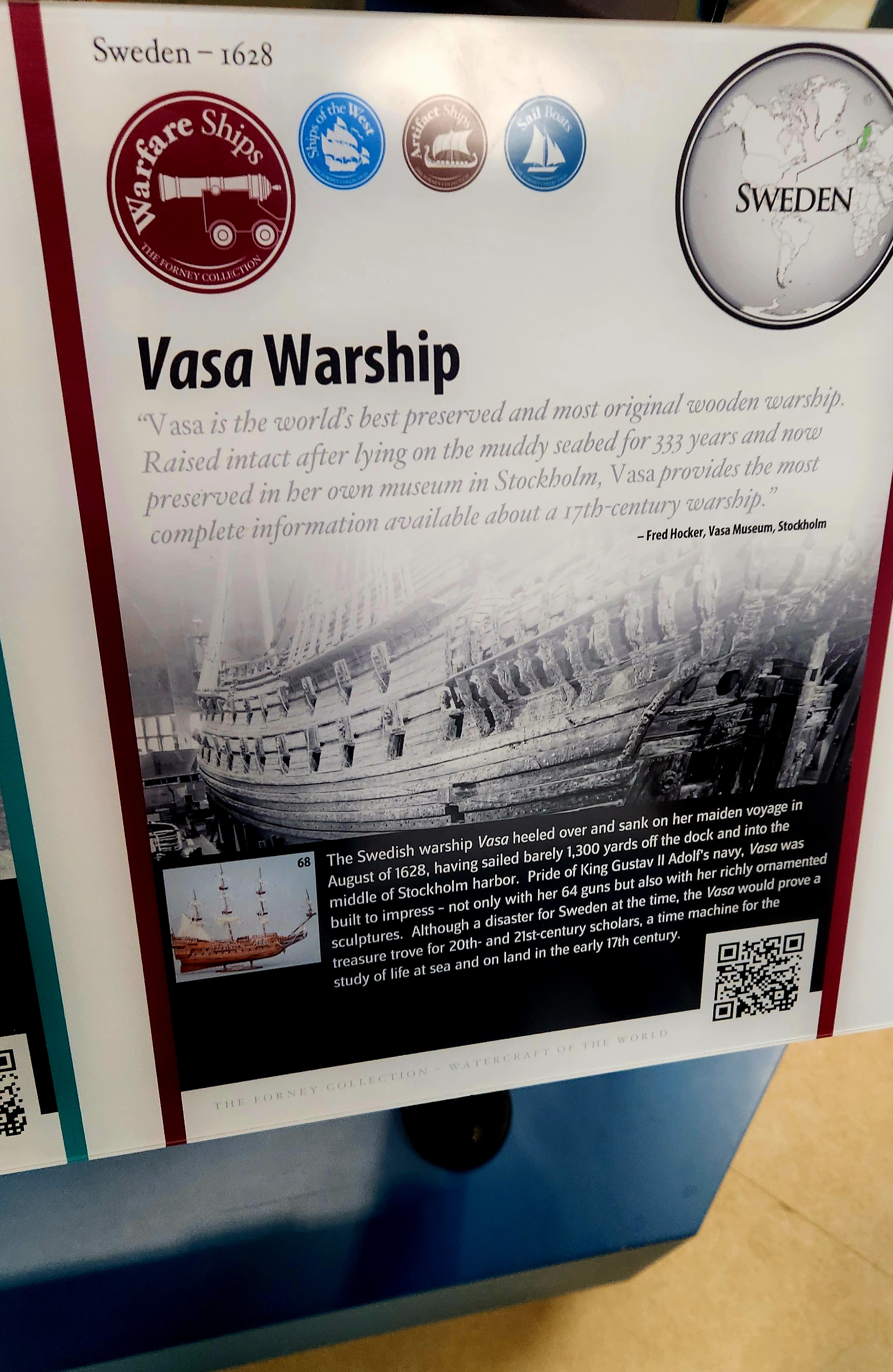
Every great maritime museum seems to need one story that borders on parable. For the Copeland Center, Ross believes that story is the Vasa, the Swedish warship that sank on its maiden voyage after King Gustav II Adolf insisted on a design more ambitious than physics would permit. Three gun decks, too much weight, open gunports, a gust in the harbor, and then catastrophe. The vessel sank scarcely thirteen hundred yards from dock.
Yet disaster, here, becomes scholarship. Preserved in brackish water for centuries and later raised with astonishing care, the Vasa now offers one of the most complete windows into seventeenth-century life at sea. Ross speaks of it as the Kalmar Nyckel’s big sister ship, less because the vessels are twins than because they share a cultural horizon. One demonstrates maritime ambition; the other, maritime humility.
 Vasa
VasaSail 250 and the Season Ahead
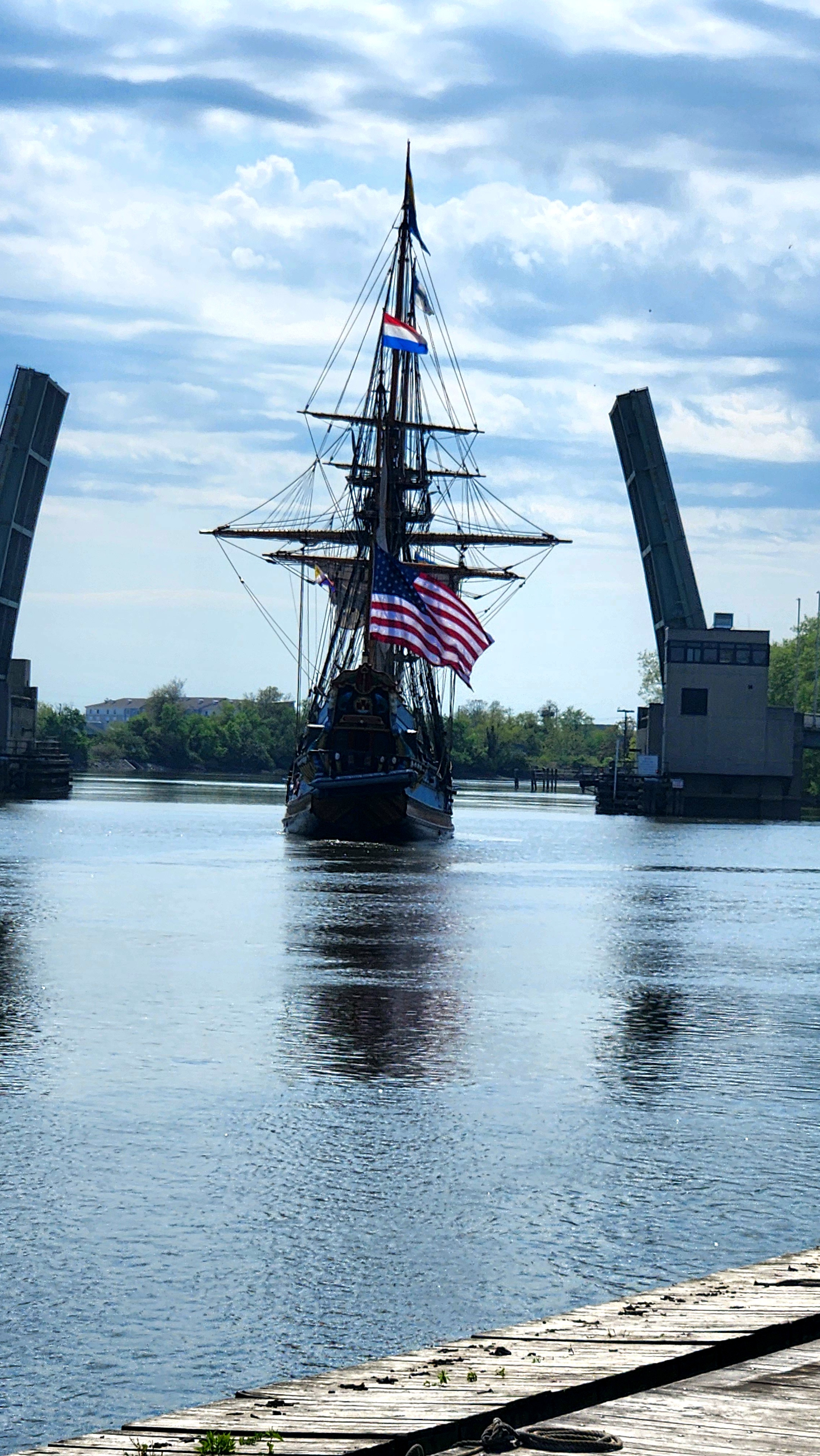
This year, the ship steps into a larger public frame. America’s two hundred and fiftieth anniversary brings with it Sail 250, a sprawling flotilla of tall ships moving up the coast, and the Kalmar Nyckel is very much part of the procession. Ross describes an itinerary that feels almost ceremonial in its sweep: departure from New Castle, a first port of call in Alexandria, appearances tied to Washington, Norfolk and Cape Charles on the Virginia circuit, a return for Delaware’s Fourth of July celebrations, and then the long pull north toward Boston.
Closer to home, the public calendar remains rich and admirably democratic. River cruises on Wilmington’s Christina River return in seasonal windows. Longer day sails depart from Historic New Castle, where the river opens wide enough for the tops’ls to do what they are meant to do. A pirate day, scavenger hunts, autumn ghost-ship theatre, and the King Neptune Gala on September 26 all reinforce the same institutional philosophy: the ship must be beloved if it is to endure, and beloved things require occasions.
The most persuasive institutions are often the ones that understand rhythm as well as mission. The Kalmar Nyckel Foundation has public sails, school programs, fundraising nights, and a gala because history needs both stewardship and occasion. Ross, looking ahead to retirement, speaks less about departure than continuity. The ship keeps its own schedule. The river keeps moving. The next set of schoolchildren is already on its way.
 Through the Open Bridges