Local Currents · Business & Innovation
Beyond the Transaction
Gregg Winnington took the long way home, from culinary school and Miami to a crowded house in Hawaii. Now, as Chief Revenue Officer of Wilmington-based Metro Payment Technologies, he is helping businesses navigate the future of payments without losing the human touch.
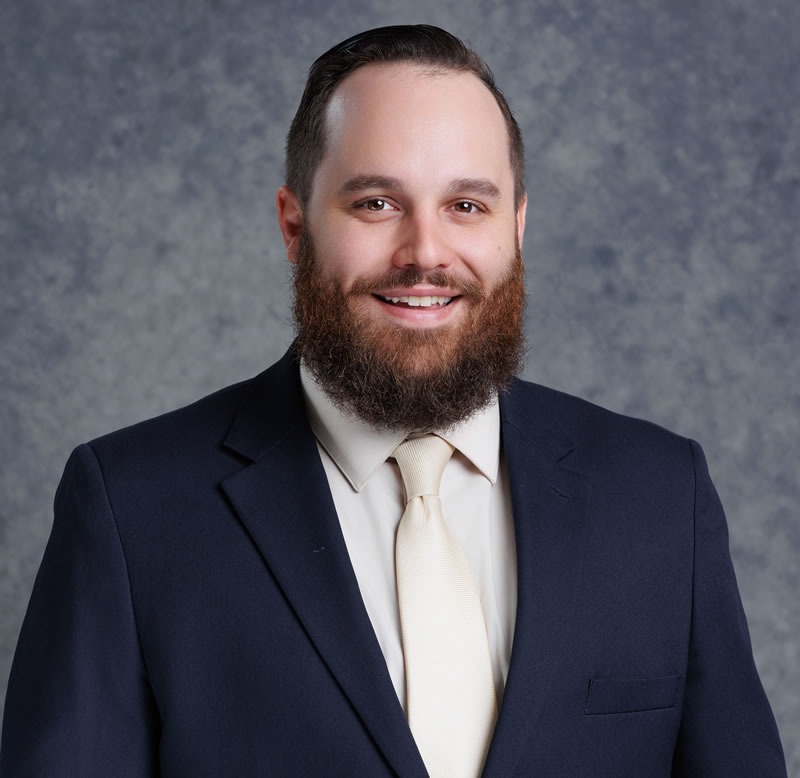
Gregg Winnington
Chief Revenue Officer, Metro Payment Technologies
Photograph courtesy of Gregg Winnington and Metro Payment Technologies
There are easier ways to end up in payments than culinary school, a 12-hour flight and a four-bedroom house in Hawaii shared with nearly a dozen friends. Gregg Winnington did not take one of them.
Today, Winnington is Chief Revenue Officer at Metro Payment Technologies, a business-to-business payments company that specializes in point-of-sale terminals, e-commerce solutions and the many ways a business takes a customer’s credit or debit card. Spend five minutes talking with him, though, and the technology quickly gives way to something more personal. Asked why he does the work, he does not begin with software, transaction volume or growth targets.
“At the end of the day, it’s because of family.”
At the time of our interview, he and Sarah had been together eight years and married five, and their daughter, Harper, was sixteen months old. That answer turns out to explain much of the route that brought him home.
The Long Way Home
Winnington grew up in Bear, Delaware, and studied culinary arts at St. George’s Technical High School, graduating in 2014. From there he headed south to Johnson & Wales University in Miami, where he earned a bachelor’s degree in culinary arts and food service management in 2018.
During college, Whole Foods Market became almost as important as the classroom. He worked there with fraternity brothers who became lifelong friends, the kind of friends who would later stand in one another’s weddings.
In 2018, one of those friends accepted a position helping open a new Whole Foods on Oahu and asked Winnington if he would come. He was young, without children or a mortgage tying him down, and the answer was easy: why not?
Winnington and 15 of his fraternity brothers made the move in all. For the first year, twelve of them shared a four-bedroom house. Winnington left for Hawaii a few months before he formally graduated, so he transferred his remaining classes online and finished the coursework on the roughly 12-hour flight, knowing that opening a new store would mean working essentially seven days a week once he landed.
Sarah, then his girlfriend and now his wife, moved to Hawaii as well. She, too, attended Johnson & Wales, earning a degree in event management. Hawaii became more than an adventurous chapter. It became where they built the foundation of a life together, becoming engaged and ultimately marrying there before making the move east.
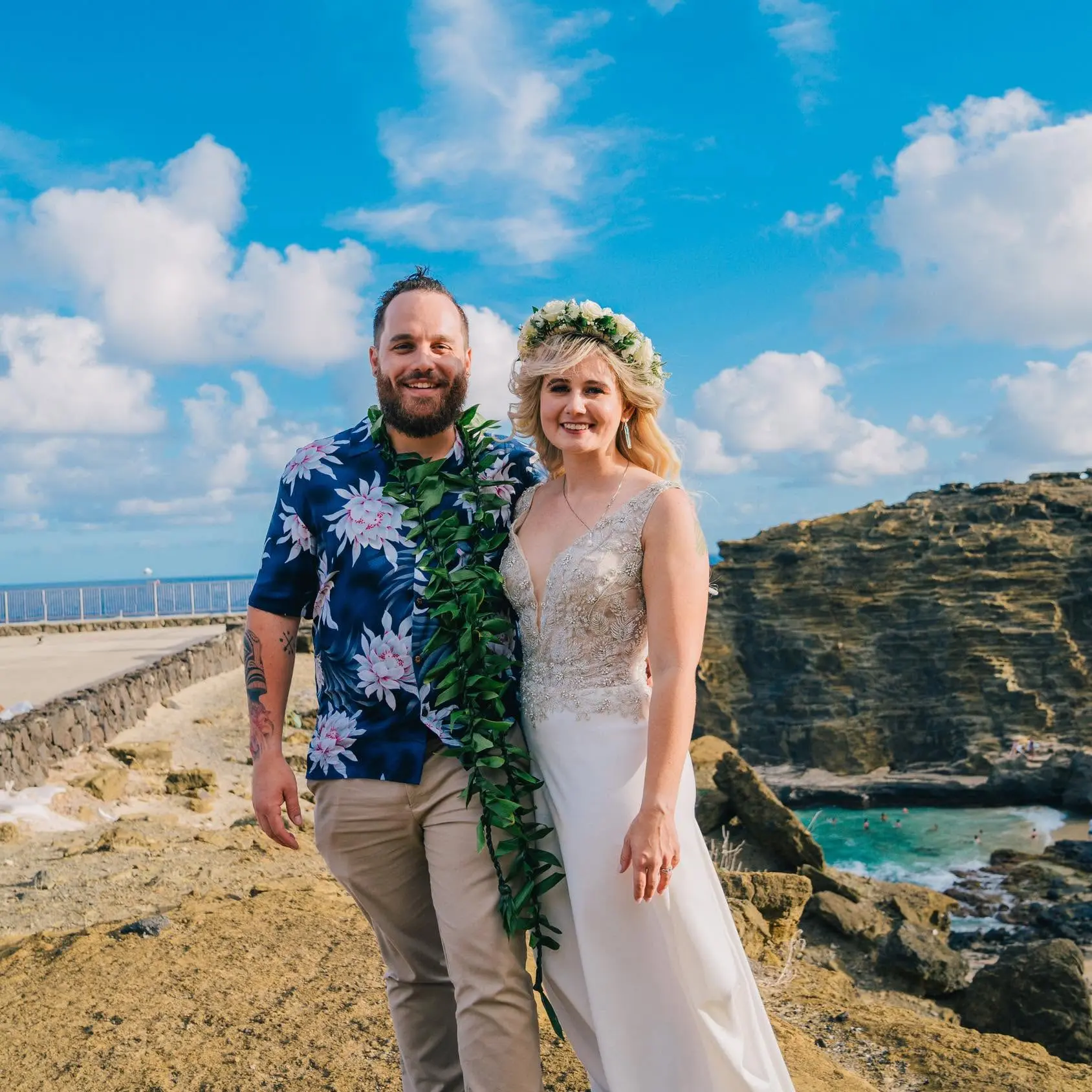
Gregg and Sarah on the coast in Hawaii on their wedding day.
Photograph courtesy of Gregg Winnington

Gregg and Sarah amid the gardens on their wedding day.
Photograph courtesy of Gregg Winnington
When the Plan Changes
Then COVID changed the rhythm of nearly everything.
Hawaii’s shutdowns were especially severe, Winnington remembers, and the food and hospitality world no longer looked the way it had when he arrived. Somewhere in the disruption, the question shifted from what was exciting now to what would make sense ten years from now: settling down, growing a family, buying a house, going home.
“I started doing some soul searching,” he says.
The answer pointed home.
Metro Payment Technologies had been in the background of Winnington’s life for years. His mother had worked with the company for a long time, and the family had known Metro’s owner, Mark Landis, through church for most of Gregg’s life. He had even worked with and around Metro while he was still in high school, so the business was already familiar to him, and the company had been softly recruiting him for a while. When Gregg finally called his mother to say he was looking at his next opportunity, Metro happened to be hiring.
“The stars just aligned in a way.”
He gave Whole Foods notice and stayed on roughly another three months to give them time and to prepare the move. He and Sarah married in Hawaii, left the islands in December 2021, and by the beginning of 2022 Winnington was full-time at Metro.
Payments, With a Pulse
At first glance, payments can sound like the least romantic part of running a business: terminals, rates, gateways, software and transaction volume. Winnington talks about it differently. The goal, as he describes it, is to give a merchant a solution that actually makes sense for the business and helps save money on processing month over month and year over year.
Metro’s sweet spot is small- and medium-sized businesses, the restaurants, retailers, farms, orchards, professional offices and growing companies whose payment systems have to work every day, even when nobody wants to think about them. The company handles in-person point-of-sale technology, online payments and other merchant solutions, but Winnington says the differentiator is often simpler. Support is high-level and human: real people answer, answers come quickly and problems get resolved fast.
“They’re talking to real people when they call.”
His own days reflect that promise. One morning may be spent in one-to-one meetings through networking groups, prospecting or pitching; another may be spent meeting a prospective client to talk through a solution, or on client service and support that can take him up and down Delaware before dinner. Installations, training, infrastructure updates and new hardware fill the rest.
“Every day is different.”
The team works together in Metro’s Centerville Road office five days a week, a deliberate choice. The culture and the speed of internal communication, Winnington says, are what let them get a client an answer quickly, and he believes some of that would be lost in a fully work-from-home arrangement.
There is a hospitality instinct in all of it. Culinary school and payment technology may appear to belong to different worlds, but both depend on noticing what someone needs, solving the problem in front of you and making the complicated feel seamless.
What Comes Next
Winnington is also looking ahead. Metro has taken on artificial intelligence projects, software development and new partnerships, and there is interesting AI work still being refined, though he is deliberately careful not to give away details. The excitement, he says, is in finding technology that can make the company and its clients work smarter without removing the human layer that made the business valuable in the first place. Alongside that sit client acquisition and the pursuit of larger accounts. When we spoke, Metro had a couple of trade shows ahead, including its annual Florida show about two weeks later.
Payments themselves do not really have an off-season.
“We’re in the payments, and the payments are all the time.”
Some accounts surge with summer and fall, particularly farms and orchards. Others feel the bump around Christmas. But the core need remains constant: when a customer is ready to buy, the transaction has to work.
The Reason Underneath It
The schedule rarely fits neatly inside business hours. A client that is closed on weekends may need an installation, a training session, an infrastructure update or new hardware then. Networking events spill into Saturdays. A technical problem does not always wait for Monday.
Gregg, Sarah and Harper.
Photograph courtesy of Gregg Winnington
Still, Winnington guards the other side of his calendar. When Sarah is not working, weekends mean family time, walks and parks around Delaware with Harper.
That is the part of the story he returns to most naturally.
The move to Hawaii began as an adventure. The move back to Delaware was something else: a decision about the kind of life he wanted to build. Metro gave him a place to connect the two, the appetite for new ideas he found by leaving home and the grounding he found by returning to it.
Payment technology may be getting faster, more automated and more intelligent. Winnington seems comfortable with that. He is helping build the next layer of it.
But when the conversation circles back to why any of it matters, his answer has not changed.
Family first. The transaction comes after.