Heritage & Place
The Keeper of Brandywine Village
Rué Lam steps into a friend's unfinished dream, a small museum, a long quest, and a quiet plan to make Wilmington's oldest village matter again.
Heritage & Place · Summer 2026 · America250
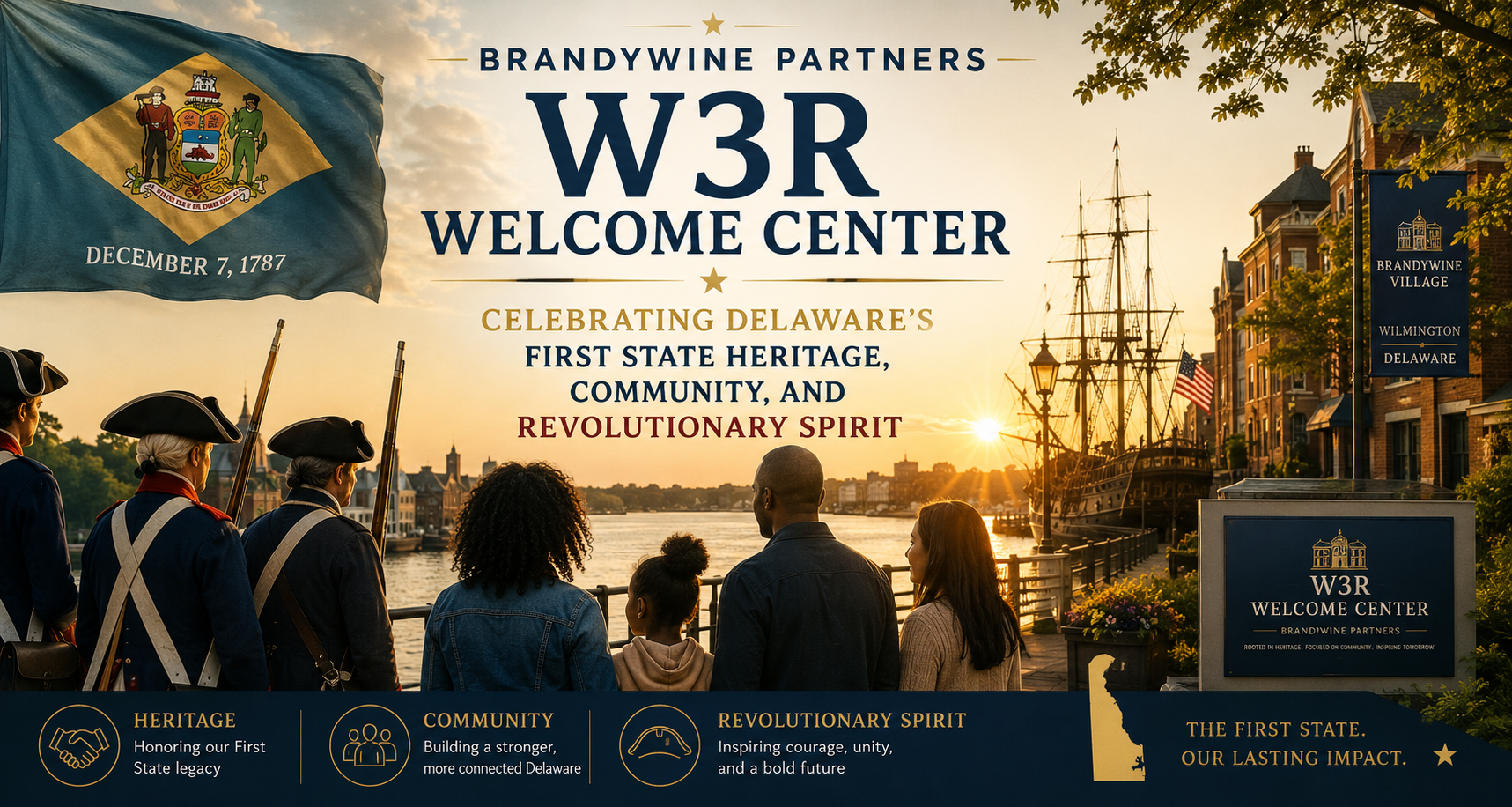
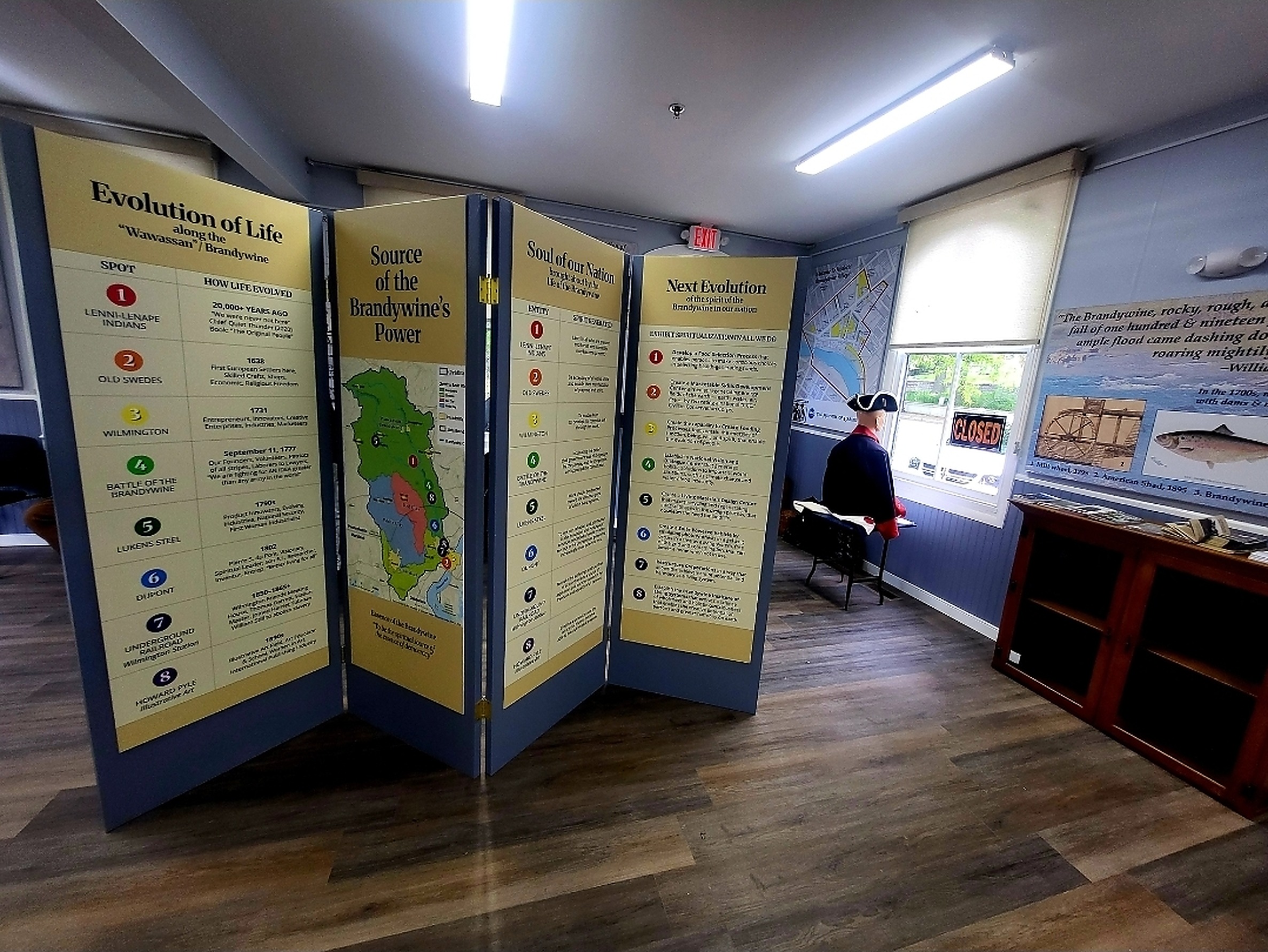
The room was, until very recently, a storage closet. Now it is something closer to a parlor, a small, light-filled welcome center on the edge of Brandywine Village in Wilmington, Delaware, where ten thousand years of local history unfurls along a single wall and a pot of coffee waits, more or less permanently, for whoever wanders in. Two weeks open and counting, the Brandywine Partners and W3R Welcome Center is the unlikely culmination of a decade of patient work, a friendship that outlived its founder, and a conviction, quiet but unwavering, that this corner of the First State deserves to be looked at again.
Presiding over it, with the disarming calm of someone who never sought the title, is Rué Lam. The name is spelled R-U-É, accent aigu over the e, and the surname, Lam, is short and emphatic. She is the current president of Brandywine Partners and W3R Inc., a nonprofit dedicated to telling the long story of Brandywine Village and to stewarding Delaware's segment of the Washington-Rochambeau Revolutionary Route. She did not, she will tell you, set out to lead anything. She stepped forward because someone she loved had built a dream, and because, after that someone passed away, no one else seemed quite sure what to do next.
A Friendship That Began in a Park
The dream belonged, originally, to Margaret “Peg” Tigue, a name that Wilmingtonians of a certain generation will recognize from the family pharmacy that once anchored the neighborhood. Peg had spent years in Washington, raising money for causes she believed in, and when she returned home she carried that fluency with her. She raised the funds, famously, that helped launch the Kalmar Nyckel. Then she turned her attention to her own backyard.
Rué met her, almost incidentally, on a walk in the park after returning to Wilmington in 2012. They got to talking about the village, about how far it had slipped, and how much of it was still, against the odds, intact. “She was the big sister I never had,” Rué says. For ten years they planned, block by block. Peg had the strategy; Rué, by her own account, preferred to work quietly in the background.
“I waited a few months after she passed. Then I stepped in and said, well. I will serve. I couldn’t stand to see her dream go down the tube.”
When Peg died, the organization she had built fell, briefly, into the kind of stillness that can swallow small nonprofits whole. Rué watched for a few months. Then she stepped forward, not because she wanted the spotlight, but because she had been at the table from the beginning and understood, perhaps better than anyone, what was supposed to happen next.
Block by Block
The Brandywine Partners playbook is unfashionably patient. It begins with the unglamorous work of making a place feel cared for, limbs trimmed in the park, lights strung overhead, partnerships with Downtown Visions to keep the streets clean. “When you do that,” Rué says, “it makes a difference.” Ten years on, the difference is visible: a village that had drifted toward neglect now reads, again, as a destination.
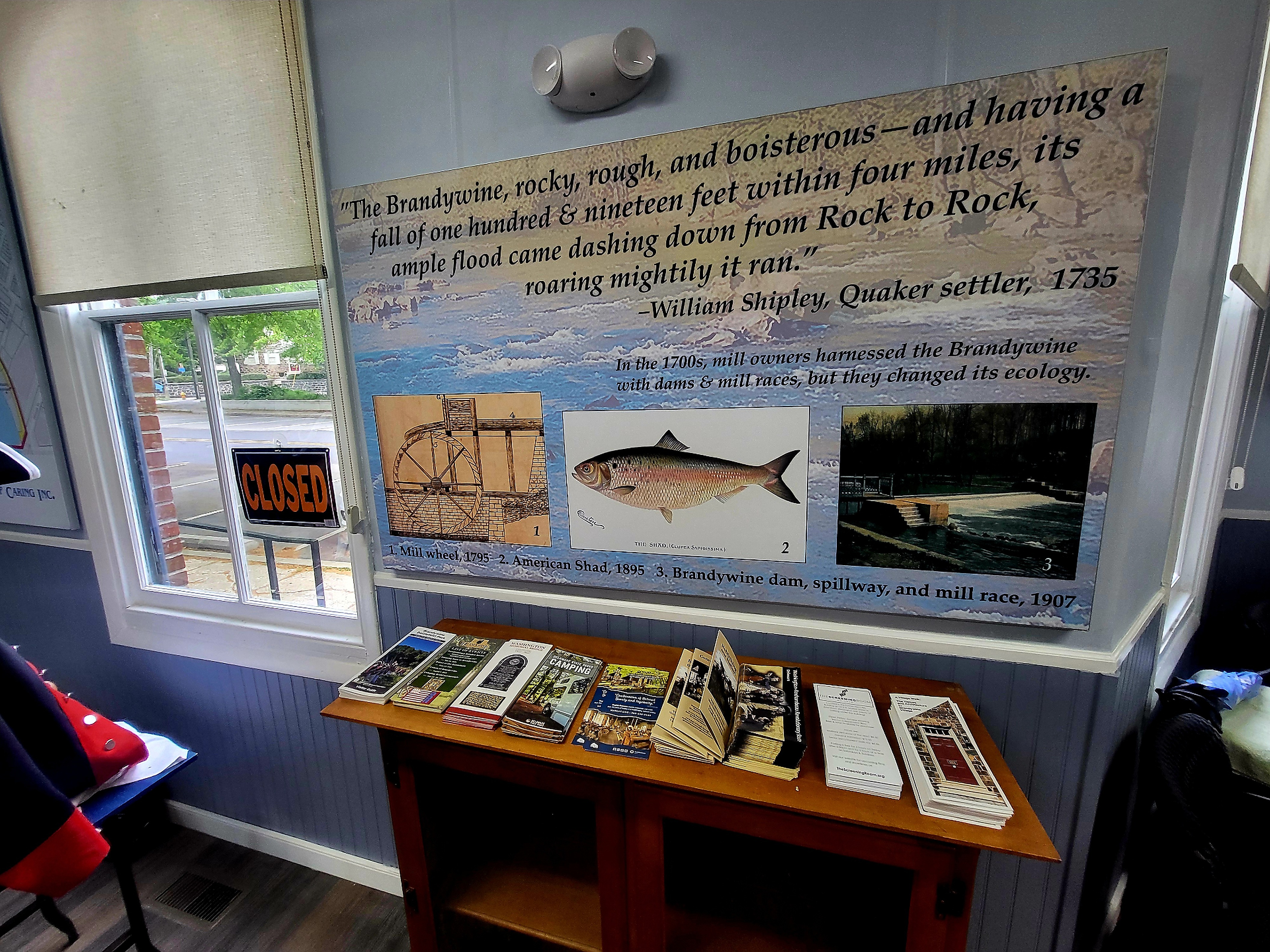
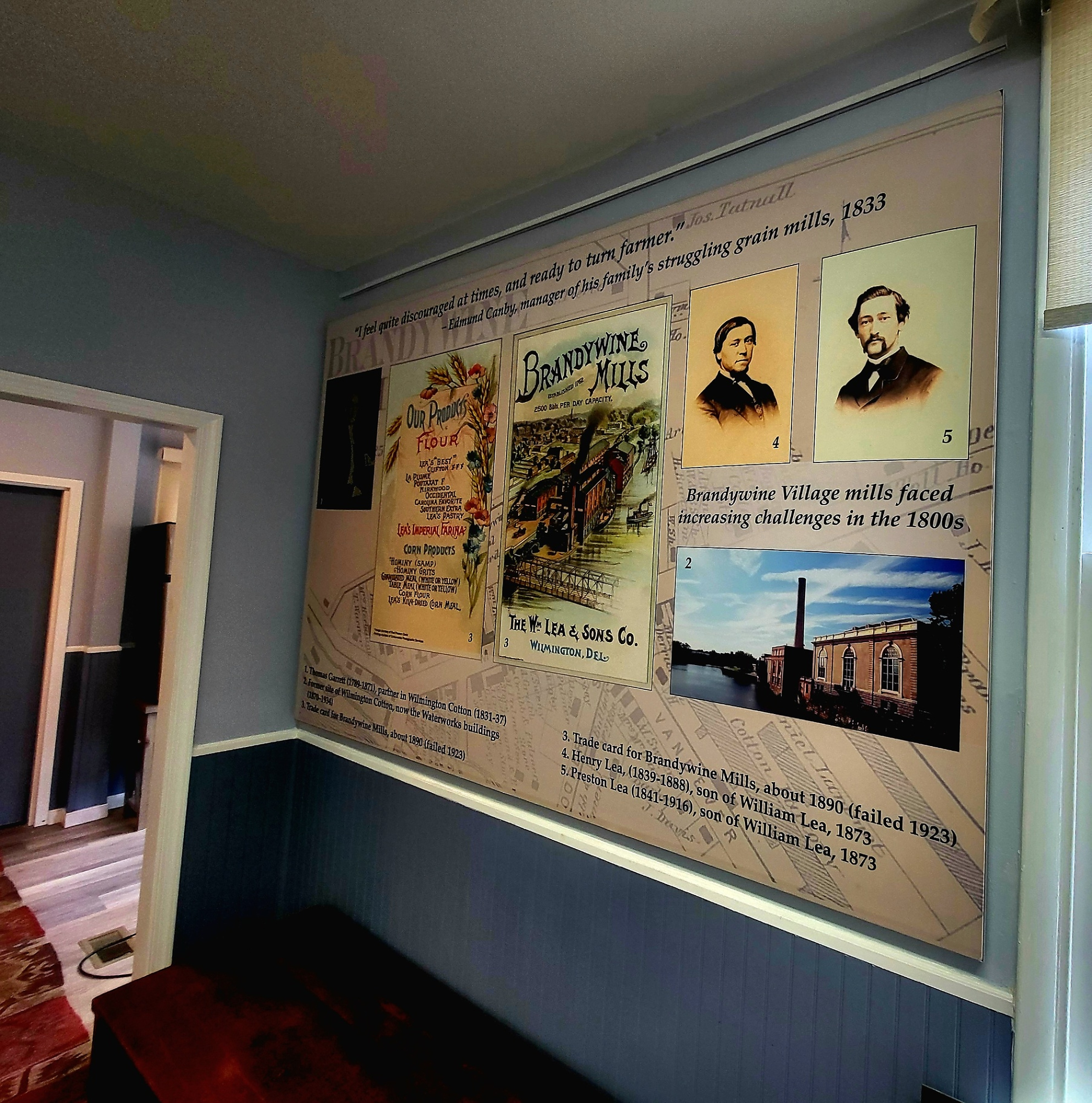
The welcome center itself is the centerpiece, and the proof of concept. Inside, an installation along one wall traces the area's history from the earliest indigenous presence ten thousand years ago through the formative decades of the seventeenth and eighteenth centuries, when Brandywine Village came into its own as a milling community on the river. George Washington walked these streets to call on his friend Joseph Tatnall, a Quaker miller whose famous declaration, “I will not fight for thee, but I will feed thee”, became one of the more elegant compromises of the Revolution. The mills fed the Continental Army. The village fed the country.
An Invitation, Quietly Issued
The center is open to the public Thursday through Saturday, ten in the morning to three in the afternoon, and by appointment Monday, Tuesday, and Wednesday, which is to say, essentially every day except Sunday. There is a small reading room. There is a kitchen. There is, increasingly, the murmur of plans: a colonial cookie program (ginger and molasses, mostly, with a few sugar cookies thrown in for the children); a continental breakfast on weekend mornings; a calendar of historic lectures running through the year.
For the summer, Rué is most excited about the children's programming. She has secured Dr. Frederick Magner, a retired Army physician of more than thirty years and a Chadds Ford resident, who appears in full Revolutionary-era surgeon's regalia and walks young visitors, with theatrical glee, through the realities of eighteenth-century battlefield medicine. He explains, in vivid terms, what happened when a cannonball met a leg. Then he asks the children: who wants to be an amputee? Every hand in the room goes up.
“We are hoping to make this into another little Williamsburg or Jamestown, a historic place that draws people in and gives them something true to take home.”
The literature on the front table includes self-guided walking tours of the village's historic homes and a generous selection of pamphlets on the broader Brandywine Valley, the trails, the attractions, the Washington-Rochambeau Route as it threads from Newport, Rhode Island, all the way to Yorktown, Virginia. As an official host venue for the America250 commemoration, the center will anchor a slate of exhibits and educational programs during the nation's two hundred and fiftieth anniversary year.
The Steward
Rué Lam is not, by temperament, a figurehead. She prefers the work to the credit, the conversation to the lectern. But sit with her for an hour in this newly opened room, coffee at the ready, a sandwich board waiting to go out on the sidewalk, a council member due in at one to talk about funding, and the picture sharpens. What she is doing, with characteristic understatement, is keeping a promise. To Peg Tigue. To the village. To the long, quiet idea that places like this one are worth the trouble of remembering.
The welcome center, two weeks young, is already the answer to a question Brandywine Village has been asking for a generation: what would it look like if someone simply showed up? The door is open Thursday through Saturday. The coffee is on. A cookie, eventually, will be available for a modest donation. And the history, ten thousand years of it, is, at last, on the wall.
Visit · Welcome Center
Brandywine Partners & W3R
Brandywine Village · Wilmington, Delaware
- Open
- Thursday – Saturday · 10 a.m. – 3 p.m.
- By Appt.
- Monday · Tuesday · Wednesday
In Memoriam · Founder
Margaret “Peg” Tigue
Architect of the Welcome Center’s vision. Five decades of Delaware public service, from the Kalmar Nyckel to Tall Ships Delaware to the village she loved most. The center stands as her continuing gift to Wilmington.